Food Harmony is a Saint Lucian agribusiness dedicated to regenerative agriculture, healthy food production, and food systems education.

Food Harmony
read more

Chocolala is a women-led Dominican agribusiness that produces artisanal chocolate and related products while promoting sustainable livelihoods, gender equality, and community development.
ABOUT CHOCOLALA
Year of registration: 1990.
Number of employees: 19.
Business sector: Agribusiness.
Mission: To produce high-quality artisanal chocolate, creating sustainable livelihoods for rural women and contributing to the development of their community.
Vision: To become a competitive company in national and international markets, while promoting gender equality, social inclusion, and local economic development.
Nelfi Altagracia García – Founder
Nelfi Altagracia García is a social worker, founder of several community groups in her municipality, and a tireless advocate for community causes. She founded the artisanal chocolate factory Chocolala and participates in various initiatives that promote the integration of women in all areas of society, as well as their inclusion in decision-making related to the development and progress of the municipality and the Dominican Republic. She has completed technical studies at the INFOTEP Professional Technical Institute and has a background in Business Administration.
CONTEXT
Background
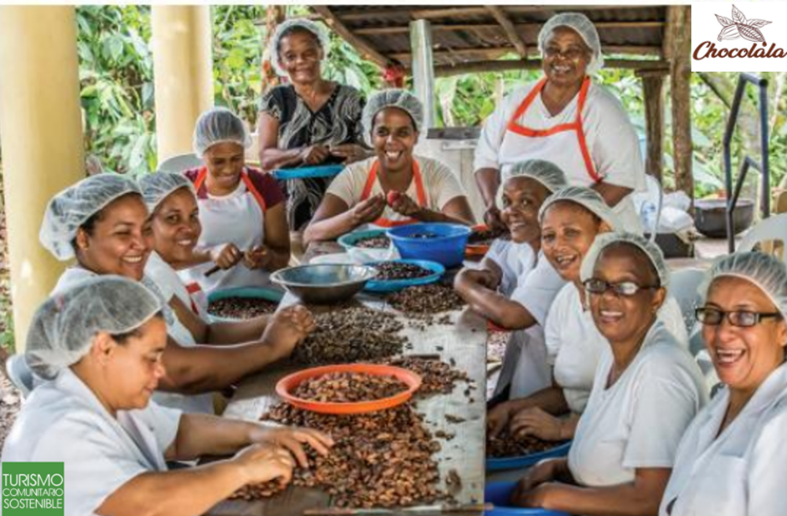
Chocolala was founded in 1990 in the community of Las Lajas, in the Dominican Republic, when five rural women began producing and selling artisanal chocolate as a way to generate income without leaving their families. Over time, the initiative was organized as a community association and received support from international aid, which enabled the purchase of land and basic machinery to expand production. Subsequently, the brand evolved into Chocolala, establishing itself as a women-led agro-industrial enterprise. Today, the company has grown to employ around 19 people directly and 75 people indirectly—mostly women—and works with local cocoa producers, strengthening the community’s economy.
Position in the market
In the market, Chocolala positions itself as a producer of high-quality artisanal chocolate with a social impact, combining traditional methods with improvements in production standards.
Relationships with smallholders
The company maintains relationships with smallholder cocoa farmers, development organizations, and business partners. Additionally, it has established ties with national retail chains and participates in regional initiatives to strengthen the value chain.
PRODUCTS AND MARKET
Main products
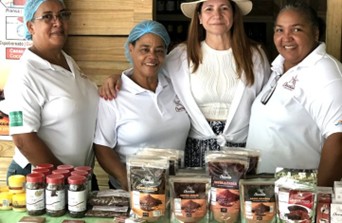
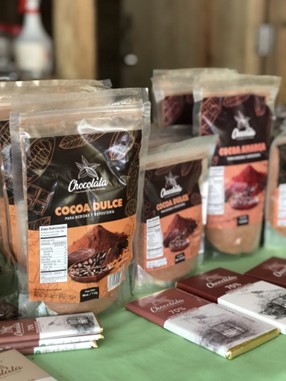
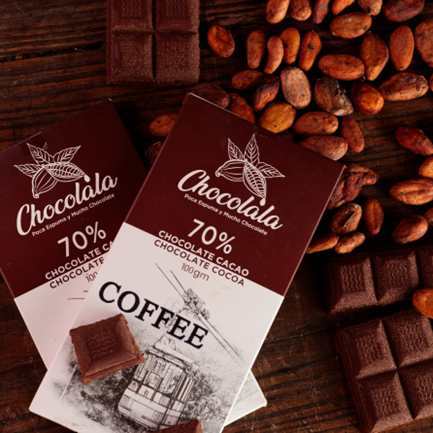
Chocolala specializes in the production of artisanal chocolate made from local cacao, particularly the Hispaniola variety, known for its fruity flavor and lower acidity. Its product portfolio includes traditional cacao nibs, chocolate bars, coated cacao beans, cacao butter, and other cacao-based products, aimed at both home consumption and the retail market.
In addition to cacao, the company has diversified its offerings with value-added products such as gofio, a traditional food made from roasted and ground corn, including variants like cinnamon gofio.
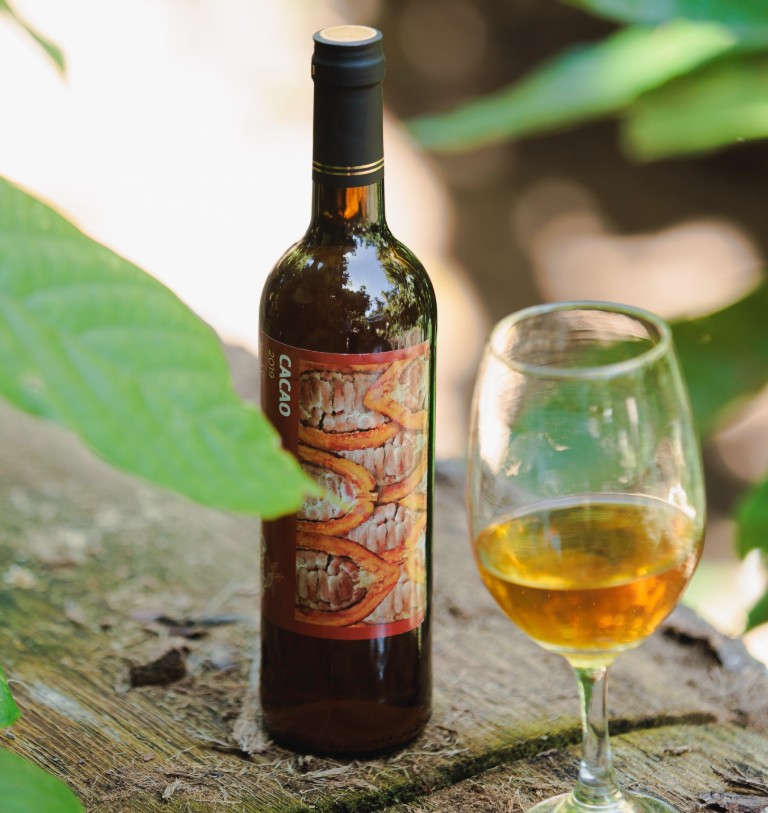
Along with artisanal wines that add value to the fruits harvested in the community, these products reflect the company’s commitment to preserving local traditions and commercial innovation.
Main markets
Chocolala’s main market is the domestic market in the Dominican Republic, where it distributes its products through supermarkets and local retail outlets. At the same time, the company is moving toward internationalization, with a focus on regional and export markets. This process is supported by improvements in quality standards, packaging, and export requirements, as well as partnerships with the European Union and other cooperation agencies.
Main services
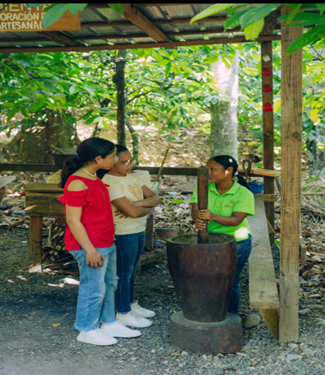
Chocolala offers agrotourism services through its Ecological Trail, a space where visitors tour cocoa plantations and learn about the entire chocolate production process, from cultivation to artisanal processing, integrating nature, culture, and community education. Additionally, the company provides artisanal cocoa and chocolate production services, complemented by technical assistance in production processes, packaging, and quality improvement.
INNOVATIONS: MILESTONES AND EXPANSION PLANS
Chocolala has evolved from a community-based artisanal production model to a more structured agro-industrial model, driven by improvements in infrastructure, technology, and internal organization. One of the key milestones was securing initial financing, which enabled the purchase of land and basic machinery for cocoa processing, marking the beginning of its productive growth.
Subsequently, the company incorporated more advanced equipment, such as grinding systems and a vertical packaging machine, which improved efficiency, product presentation, and the ability to respond to demand. At the same time, production processes were strengthened through specialized technical assistance in quality control, cocoa processing, and packaging improvements, with support from institutions such as the Institute for Innovation in Biotechnology and Industry (IIBI) and the Japan International Cooperation Agency (JICA).
A major milestone in its internationalization was its participation in the Haiti–Dominican Republic binational cocoa/chocolate value chain initiative, promoted by Caribbean Export with support from the European Union. This process facilitated access to equipment, as well as improvements in export processes and competitiveness.
In terms of social innovation, a key initiative is the creation of the Sendero Ecológico, an agrotourism destination that combines tours of cocoa plantations with educational experiences on chocolate production, generating additional income and new employment opportunities.
Currently, Chocolala remains focused on expanding its production capacity, strengthening its position in international markets, and improving its digitization, packaging, and marketing processes.
SUCCESS FACTORS AND LESSONS LEARNED
Chocolala’s success is rooted in its community origins, its female leadership, and a strong culture of resilience, which have enabled the transformation of a rural initiative into a well-established agro-industrial enterprise. The persistence of collective effort and the ability to adapt have been fundamental to sustaining its growth over time.
A key factor has been the ability to build strategic alliances with supporting institutions, cooperation agencies, and sector stakeholders. These relationships have been essential for accessing resources, improving productive capacities, and advancing modernization processes, thereby strengthening the company’s integration into broader value chains.
Among the main lessons learned is the importance of strengthening internal management, formalizing the business, and implementing business planning as the foundations for sustainable growth. Chocolala’s experience demonstrates that developing organizational capabilities is just as important as access to financing or technology for competing in more demanding markets.
Additional Resources
Recent Business Profiles
Food Harmony is a Saint Lucian agribusiness dedicated to regenerative agriculture, healthy food production, and food systems education.

Enimiro Products Uganda Ltd develops traceable and sustainable agricultural value chains in vanilla, coffee and dried fruits, empowering smallholder farmers, strengthening rural livelihoods and...

The Plant Doctor is an agribusiness focused on the development and production of organic agricultural inputs and plant health solutions.

Ecobed Biotech Brand transforms organic waste into valuable resources, empowering smallholder farmers, promoting climate resilience, and developing eco-friendly products like mosquito repellent...

Rhea is a Kenyan AgriTech company providing AI-powered soil testing and soil health solutions to help smallholder farmers improve yields and farm sustainably.