Food security in the face of climate disasters: women entrepreneurs leading solutions

South-South: Empowering and Growing Women-led Business Session N°10
read more

Small and medium-sized enterprises form the backbone of the African economy, representing more than 90% of businesses and employing about 60% of workers, many of whom are women and youth. They face a series of constraints such as weak infrastructure and logistics that limits services such as road networks, payment systems and warehousing facilities, and leads to higher production and delivery costs for SMEs; access to finance and inadequate skills to respond to demanding markets.Despite limitations, Africa has a wealth of successful and innovative entrepreneurs who invest in local value chains, work hard to meet consumers’ expectations and convince them to buy local, and create employment, especially for youth and women agripreneurs. Smallholder farmers, cooperatives and small and medium enterprises (SMEs) are upgrading their skills to supply local markets and get their businesses to scale.As shown by the COVID-19 pandemic, SMEs to survive and thrive need flexibility and innovation for market expansion, product development, use of technology and new skills. To be more competitive, they also need support in terms of policy reform, development of the trade support ecosystem and capacity building at the enterprise level.Finance is the backbone of any business to start and grow. SMEs often quote finance as their biggest constraint, due to high interest rates, credit worthiness, large collateral requirements and a limited knowledge of loan application together with burdensome processes. High interest rates and fears of losing business in the event of a default in repaying loans also deter SMEs from requesting bank loans.
Small enterprises tend to start with financing from informal sources (e.g., family and friends, own savings, retained earnings, sale of assets) but as enterprises grow, financing switches to more formal sources (e.g. banks and financial support institutions for debt and equity financing) is critical to scale up production, create new products or expand geographically.
Key points for discussion on serving local markets
Join our Forum to discuss and explore how to encourage innovations across agricultural value chains to transform food systems in African, Caribbean and Pacific countries and beyond, promote sustainable agriculture & leverage investments. Share insights, ask questions, and collaborate on innovative solutions for a greener future.

Managing Director, AGRF, Kenya
In 2020, Debisi joined AGRA from the CGIAR system, where he has served for the past four years as the...

President and Founder, Choco Togo
After completing his Master’s degree in Health Psychology at the University of Lomé in 2001, Komi Agbokou enrolled at the...

CEO, Panafrican Farmers Organisation (PAFO)
Fatma Ben Rejeb has been working with farmers organisations for more than 20 years. She began her involvement in land...

Head of Networks and Alliances, COLEACP
Isolina Boto is the Head of Networks and Alliances at COLEAD, a non-profit Association of private sector operators in the...

Les Jus Tillou, Benin
Ms. Bertille GUEDEGBE Agricultural engineer decided to create her own pineapple production company in 2000 after 15 years of work...

General Delegate, COLEACP
Jeremy holds a Master’s degree in Business Engineering from the Solvay Brussels School of Economics and Management (SBS-EM). Prior to...
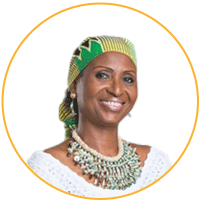
Managing Director, Eden Tree Limited, Ghana
Catherine Krobo-Edusei is the founder and managing director of Eden Tree, a Ghanaian company specialized in the production and marketing...

President, Panafrican Farmers Organisation (PAFO)
Elizabeth Nsimadala is a Ugandan young agriprenuer, the President of the Pan Africa Farmers Organization (PAFO) and the Eastern Africa...

Assistant Secretary-General, Dept Sustainable Economic Transformation and Trade, Organization of African, Caribbean and Pacific States (OACPS)
Escipión Oliveira joined the OACPS in July 2020 as Assistant Secretary-General in charge of the Department of Structural Economic Transformation...

Founder & CEO, Reelfruit, Nigeria
Affiong Williams is the CEO/ Founder of ReelFruit the largest fruit processing, packaging and marketing company in Nigeria. The company,...

Fund Manager, EDFI AgriFI
Dimitry is an experienced impact investment professional, passionate about entrepreneurship and development. In 2018, he joined AgriFI, an EU-funded blending...
In English
In French
Recent Sessions
Food security in the face of climate disasters: women entrepreneurs leading solutions
Exploring international and intra-regional market opportunities for Caribbean agrifood MSMEs

Empowering Youth and Women in Agrifood: Bridging Entrepreneurship and Job Creation for Sustainable Impact.