Food Harmony es una empresa agroindustrial de Santa Lucía dedicada a la agricultura regenerativa, la producción de alimentos saludables y la educación sobre los sistemas alimentarios.
Food Harmony
leer más

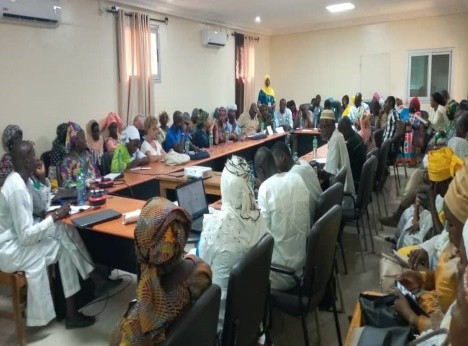
ETDS is a senegalese NGO specialised in territorial planning, local development and the structuring of agri-food value chain. The company was presented during Innovation Session n°22.
Company status: NGO
Year of registration: 2012
Number of employees: 16 (10 women and 06 men).
Pape-Tahirou KANOUTE, Founder and Executive Director
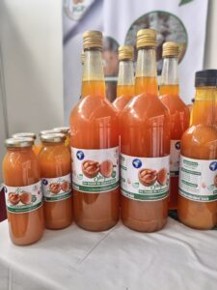
Pape-Tahirou KANOUTE is a committed senegalese economist, founder and Executive Director of the NGO Économie, Territoires et Développement Services (ETDS) , set up in 2012 and specialising in territorial planning, local development and the structuring of agri-food sectors. A graduate in economics and territorial governance, Mr KANOUTE has been working for several years to promote local products, particularly through geographical indications (GIs). Under his leadership, ETDS played a central role in obtaining the Protected Geographical Indication (PGI) for the «maad de Casamance», an emblematic fruit of the region, while at the same time warning of the environmental threats to its survival, such as bush fires and deforestation. Recognised for his innovative and sustainable approach, his work earned him an invitation in 2024 to the Journées Ivoiriennes de la Propriété Intellectuelle et de l’Innovation (JIP2I) , organised by OIPI, where he shared his expertise on the use of GIs as a lever for local development. He is also a fervent advocate of these economic tools on a continental scale, having worked with international organisations such as the FAO and the World Intellectual Property Organisation (WIPO) to promote their strategic use in Africa. As a lecturer and author, he regularly speaks on issues relating to territorial governance, the preservation of local know-how and the promotion of local products such as honey from Casamance, salt from Lake Retba and Manjak woven loincloths. In 2024, he was recognised as one of the most influential figures in the Ziguinchor region, thanks to his leadership based on strong human values, his tangible impact on rural communities, and his vision of sustainable development rooted in local resources and cultural heritage.
Business Model
ETDS was set up in Senegal in 2012, in a context marked by a growing need for territorialised approaches to sustainable development. It was set up with a view to strengthening the capacity of local authorities to plan and manage their development by drawing on the resources, know-how and economic dynamics specific to each territory. ETDS was founded, to address the challenges of decentralisation, adding value to local products and structuring rural industries, with the aim of promoting inclusive and innovative local governance. From the outset, the NGO has positioned itself as a key player in supporting local authorities, developing GIs and promoting Senegal’s agri-food heritage, with a strong presence in the Ziguinchor region of Casamance.
Mission: to contribute to the socio-economic development of local areas by mobilising local resources and creating national and international alliances and networks. In line with the territorialisation of public policies advocated by the Senegalese government.
Objectives:
Strong relationships with smallholders, cooperatives…
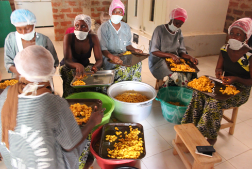
ETDS maintains close relations with local farmers and cooperatives, and is actively involved in rural development and promoting local products.
Products and markets
ETDS offers a wide range of services :
Innovations: Milestones and Expansions Plans
Since its creation, ETDS has implemented innovative approaches to strengthen the capacities of local players. It has developed training programmes tailored to the needs of communities, encouraged the creation of brands and labels for local products, and set up mechanisms for evaluating and capitalising on projects. The organisation plans to extend its activities to other countries in the West African sub-region, adapting its interventions to local contexts.
Impact of registering Madd de Casamance as a Geographical Indication:
Success Factors and Lessons Learned
Key success factors for ETDS include:
Among the lessons learned, ETDS stresses the importance of adapting interventions to local specificities, the need for close collaboration with stakeholders, and the importance of the sustainability of the actions undertaken.
ETDS has also helped to create jobs such as the LINKOM boutique, a youth group specialising in the sale and marketing of local products.
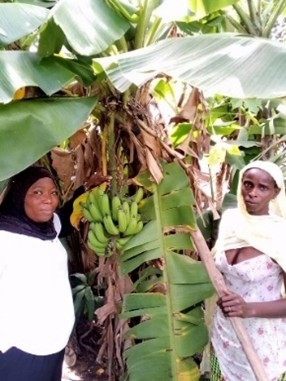
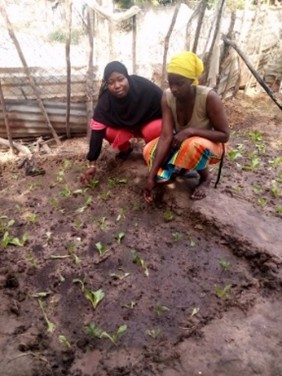
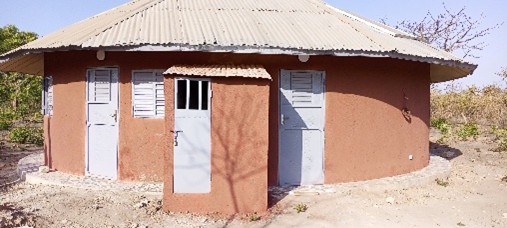
In 2017, ETDS also set up a 04-hectare agroecological pilot farm in the village of Koubanack (Bignona department). This farm is one of the components of the ETDS strategy, which aims to keep young people in their terroirs by offering them an opportunity to train in innovative, diversified and environmentally-friendly agriculture. ETDS welcomes young people from a variety of backgrounds to the farm for study, exchange or discovery purposes (wwoofing).
Additional Resources
Recent Business Profiles
Food Harmony es una empresa agroindustrial de Santa Lucía dedicada a la agricultura regenerativa, la producción de alimentos saludables y la educación sobre los sistemas alimentarios.

Enimiro Products Uganda Ltd develops traceable and sustainable agricultural value chains in vanilla, coffee and dried fruits, empowering smallholder farmers, strengthening rural livelihoods and...
The Plant Doctor es una empresa del sector agroalimentario dedicada al desarrollo y la producción de insumos agrícolas ecológicos y soluciones para la salud vegetal.

Ecobed Biotech Brand transforms organic waste into valuable resources, empowering smallholder farmers, promoting climate resilience, and developing eco-friendly products like mosquito repellent...
Rhea es una empresa keniana de tecnología agrícola que ofrece soluciones de análisis y gestión de la salud del suelo basadas en inteligencia artificial para ayudar a los pequeños agricultores a...