Food Harmony es una empresa agroindustrial de Santa Lucía dedicada a la agricultura regenerativa, la producción de alimentos saludables y la educación sobre los sistemas alimentarios.

Food Harmony
leer más

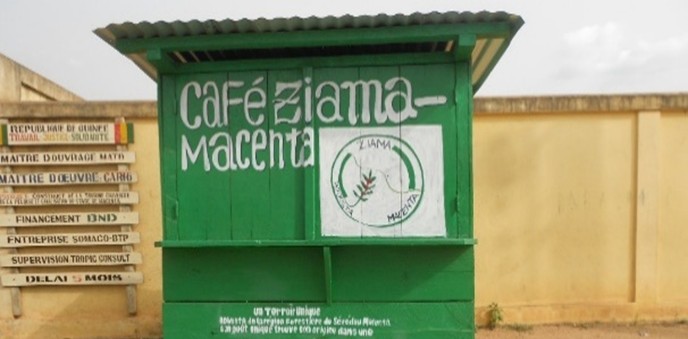
ADECAM is a community-driven organisation in Guinea dedicated to protecting, promoting, and developing the Ziama-Macenta Geographical Indication coffee, while supporting smallholder producers through quality enhancement, environmental stewardship, and sustainable value-chain development.
LENO Florent Faya, Technical Director
Florent Faya LENO is a dedicated Guinean professional committed to promoting origin-linked products and strengthening agricultural value chains through Geographic Indications (GI). Born on 21 June 1989 in Guinea and holding a degree from the Faculty of Administrative Sciences and Management at the University of Labé, he currently serves as the Technical Director of the Ziama-Macenta GI Coffee. In this strategic role, he oversees the general administration of the association, supports producers in applying proper production techniques, ensures the quality of coffee from the Ziama massif, and safeguards the label against fraud and counterfeiting. As a key actor in the sustainable development of the GI coffee sector, he works to enhance the value and market positioning of origin-certified coffee to improve producer incomes, while promoting agroforestry practices to preserve the local ecosystem. Highly engaged in regional initiatives related to GIs, Mr. LENO has taken part in several major events, including a study trip to France on GI communication and marketing organized by CIRAD and OAPI (2024), the international colloquium on GI development in Africa held in Douala (2024), the Africa–GI Training at the Denis Ekani Intellectual Property Academy in Yaoundé (2022), and the OAPI Interministerial Conference on GIs in Abidjan (2022). His commitment to quality, label integrity, and the valorization of Guinea’s coffee heritage positions him as one of the emerging figures in the promotion of origin-linked products in West Africa.
BUSINESS MODEL
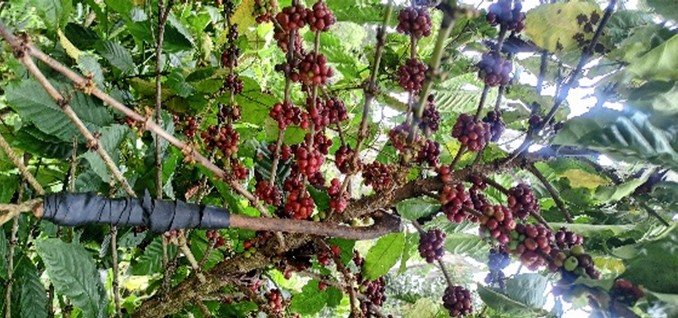
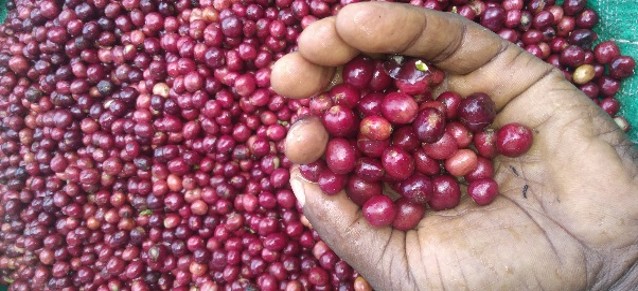
Ziama-Macenta coffee, grown in the forest region of Macenta in southeastern Guinea, traces its origins back to the colonial era. Renowned for its exceptional quality, it received official recognition as a Protected Geographical Indication (PGI) in 2013. It is produced in a unique environment surrounding the UNESCO-listed Ziama Biosphere Reserve, which gives the product a special ecological and heritage value. Economically, this specialty coffee positions itself as a high-end product, exported notably to demanding international markets such as France. The organisation of the value chain is based on local cooperatives grouped within the Association for the Defence of Ziama-Macenta Coffee (ADECAM), with support from international partners such as the Rio Tinto Foundation and the French Development Agency (AFD). Around 3,000 small producers many of whom cultivate an average of one hectare grow this coffee over an estimated 2,000 hectares.. Around 3,000 small producers, many of whom work on plots averaging one hectare, grow this coffee on an estimated total of 2,000 hectares.
Mission:
Promote high-quality coffee, support local producers and preserve the environment through sustainable agricultural practices.
Objectives :
STRONG RELATIONSHIPS WITH SMALLHOLDERS, COOPERATIVES…
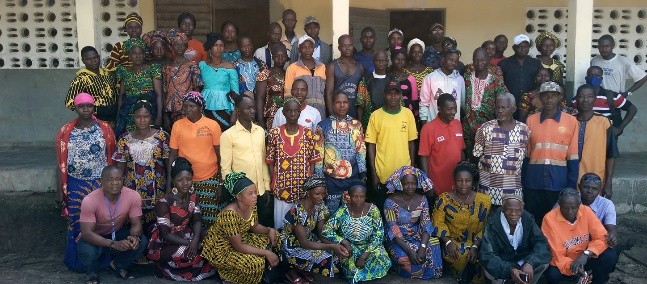
The Association for the Defence of Ziama Coffee in Macenta (ADECAM) plays a central role in the organisation and development of the coffee industry in the Macenta region of Guinea. It brings together several local cooperatives, such as Woko and Diani, which represent around 3,000 small producers growing coffee on a total area of 2,000 hectares.
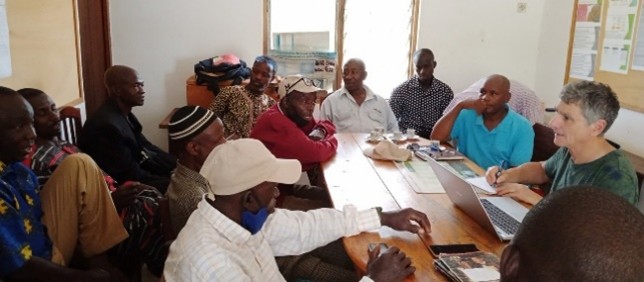
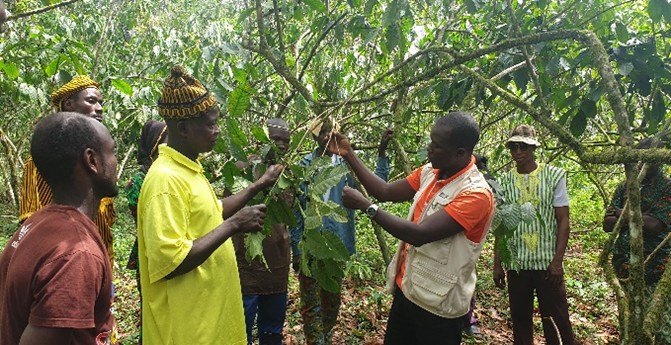
ADECAM acts as an umbrella organisation, facilitating coordination between cooperatives and individual producers. It offers technical and organisational support, particularly in terms of training in good agricultural practices, implementing sustainable agroforestry systems and complying with the quality standards required for export.
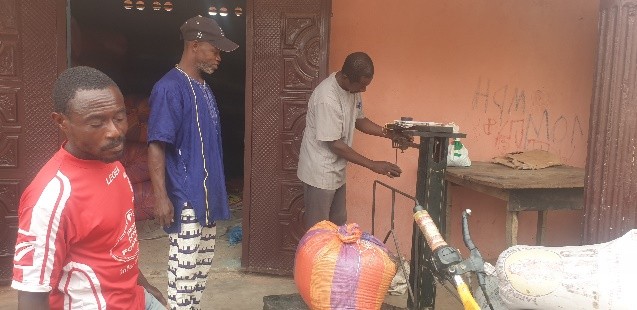
The association also plays a crucial role in marketing Ziama-Macenta coffee, promoting the product on international markets and facilitating access to commercial partners for cooperatives. It works in collaboration with international organisations such as the Rio Tinto Foundation and the French Development Agency (AFD), which support initiatives for sustainable development and improving the living conditions of local producers.
In summary, ADECAM serves as an essential link between local farmers, cooperatives and markets, promoting a collaborative and sustainable approach to coffee production in the Macenta region.
PRODUCTS AND MARKETS
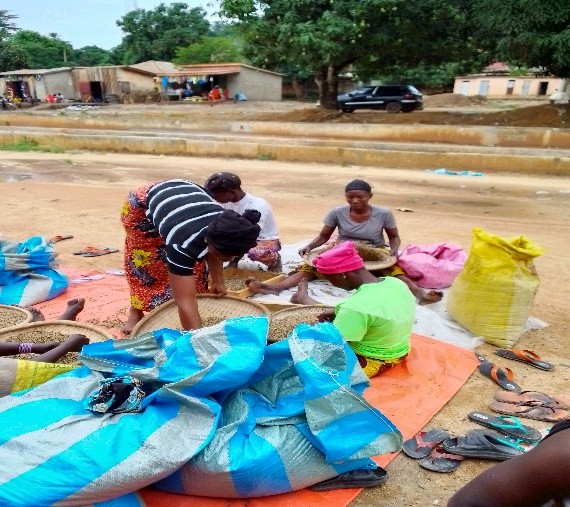
The coffee is available in several forms:
INNOVATIONS: MILESTONES AND EXPANSION PLANS
The development of Ziama-Macenta coffee is based on several key milestones that have helped to promote this local product nationally and internationally.
Despite these advances, several challenges remain in accelerating the sector’s expansion. Among the needs identified are strengthening the technical and financial capacities of cooperatives, improving processing and storage infrastructure, and consolidating strategic partnerships to access new regional and international markets. These levers are essential to making Ziama-Macenta coffee a sustainable driver of local economic development.
SUCCESS FACTORS AND LESSONS LEARNED
Success factors
Lessons learned:
The need to implement a good communication strategy for the Ziama Macenta coffee GI by creating a website and attending major trade fairs to promote this excellent coffee.
Additional Resources
Recent Business Profiles
Food Harmony es una empresa agroindustrial de Santa Lucía dedicada a la agricultura regenerativa, la producción de alimentos saludables y la educación sobre los sistemas alimentarios.

Enimiro Products Uganda Ltd develops traceable and sustainable agricultural value chains in vanilla, coffee and dried fruits, empowering smallholder farmers, strengthening rural livelihoods and...
The Plant Doctor es una empresa del sector agroalimentario dedicada al desarrollo y la producción de insumos agrícolas ecológicos y soluciones para la salud vegetal.

Ecobed Biotech Brand transforms organic waste into valuable resources, empowering smallholder farmers, promoting climate resilience, and developing eco-friendly products like mosquito repellent...
Rhea es una empresa keniana de tecnología agrícola que ofrece soluciones de análisis y gestión de la salud del suelo basadas en inteligencia artificial para ayudar a los pequeños agricultores a...