Smart farming and digitization: how Caribbean agrifood entrepreneurs can use data and technology
Caribbean Agrifood Business Session n°23
read more

The Caribbean agri-food sector is a key driver of regional economies, encompassing primary production, agro-processing, input supply, and a wide range of supporting services. Across CARICOM Member States, agriculture and fisheries contribute an estimated 3–5 percent of GDP, while the wider agrifood system makes an even greater contribution to employment, income generation, rural livelihoods, and foreign exchange earnings. Despite this importance, the Caribbean remains a net food-importing region, with an annual food import bill estimated at approximately US$6 billion.
Reducing this import dependence has become a major regional priority. The CARICOM “25 by 2030” initiative, which aims to reduce the Region’s food import bill by 25 percent by 2030, recognizes that increased domestic production, stronger regional trade, and expanded exports must all contribute to building a more resilient and competitive agrifood sector. While efforts to strengthen intra-regional trade continue, imports are still largely supplied from outside the Region, indicating considerable scope for Caribbean producers to replace imports while increasing regional supply.
Although much attention is often given to large agricultural enterprises, micro, small and medium-sized enterprises (MSMEs) account for between 70 and 80 percent of businesses across the Caribbean and make an important contribution to employment, entrepreneurship, and value addition. However, many MSMEs face persistent constraints related to finance, certification, logistics, technology, market information, and compliance with export requirements. These challenges frequently limit their ability to compete consistently in both regional and international markets.
Despite these constraints, significant opportunities exist for Caribbean agrifood MSMEs to expand into both regional and international markets. Capturing these opportunities will require greater competitiveness, improved compliance with market requirements, and stronger understanding of buyer expectations. Against this background, this webinar seeks to encourage Caribbean agrifood businesses to adopt a more outward-looking market orientation by exploring opportunities beyond their domestic markets while strengthening commercial linkages within the Caribbean.
This webinar will bring together producers, exporters, policymakers, business support organizations, and development partners to share practical insights and strengthen pathways for expanding both international exports and intra-regional trade. Participants will gain insights into market opportunities, buyer expectations, and key export readiness requirements, including standards, certification, packaging, traceability, and market positioning.
Ultimately, the webinar aims to help Caribbean agrifood MSMEs strengthen their competitiveness, build commercial linkages, and develop practical strategies for expanding into new markets while contributing to stronger regional trade and international market integration.

Technical Specialist, Representative in Barbados, IICA

Head of Networks and Alliances, COLEAD

Project Officer, COLEAD

Market Insights Manager, COLEAD

Managing Director, Benjo Seamoss, Dominica
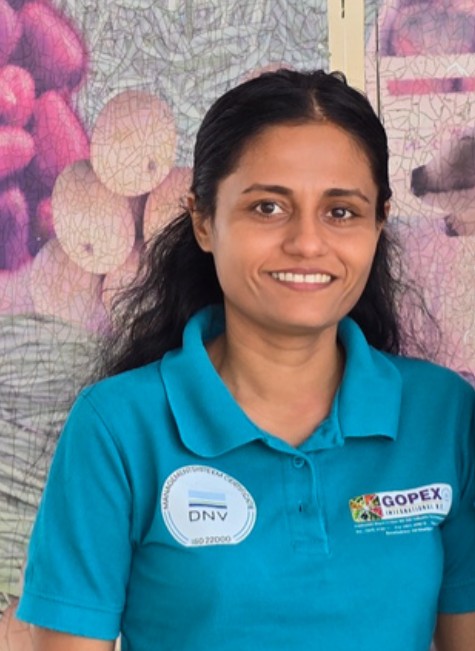
Co-Director, Gopex, Suriname

General Manager, Grenada Co-Operative Nutmeg Association

Managing Partner, Soleil Consulting

Business Development Officer, Export Barbados
English
French
Spanish
Portuguese
Recent Sessions
Smart farming and digitization: how Caribbean agrifood entrepreneurs can use data and technology

Digitalisation & AI in Agrifood: Tools for Efficiency and Market Access

Digital traceability and supply chain transparency: policies for food safety and market access